Kingdom Fall: Zombie Defense
- 4.4
- Rating
- 100.00K
- Installs
- Free
- Price

 Analysis by App-foxy
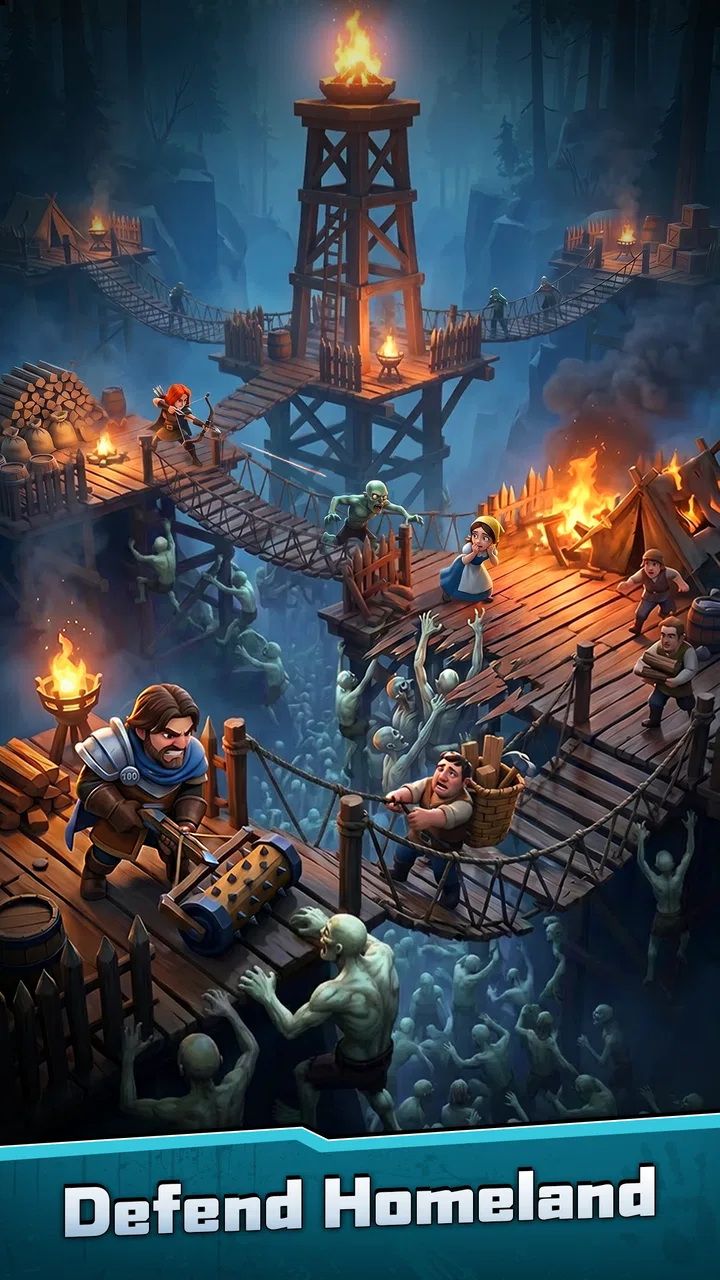
Kingdom Fall: Zombie Defense is a strategy game from LeyiGames that puts me in the role of a ruler trying to survive after a kingdom has collapsed. Its premise is easy to understand, but the appeal comes from the pressure behind every choice: I am not simply clearing enemies from a screen, I am trying to decide which problems deserve attention first when the situation is already going badly.
I found it most interesting when I stopped treating each encounter as a quick reaction test and started thinking in terms of preparation, risk, and recovery. That makes it a better fit for players who enjoy planning several moves ahead than for anyone looking for a completely relaxed action game. It is free to start, carries a Teen age rating, and currently sits at a 4.3 average from roughly 3,300 ratings, so there is already a modest player base around it.
Where the real decisions begin
The central decision space is not just about defeating zombies. It is about choosing how aggressively to pursue progress while keeping enough strength in reserve for what may follow. That distinction matters because a strategy game becomes interesting when the best immediate move is not always the best long-term move. I regularly found myself weighing a tempting advance against the safer option of preserving resources, positioning, or momentum.
You May Also Like

 Blood Strike: 2.5 Anniversary
Blood Strike’s Loadouts Turn Every Drop Into a Tactical Gamble
A close look at Blood Strike’s custom loadouts: how fast access to signature weapons reshapes its battle royale rhythm, rewards preparation, and narrows the gap between fights.

 Pandora - Music & Podcasts
Pandora’s Music Is Easy to Start, but Harder to Recover
Pandora’s strength is its low-effort path from a seed to a station. Its weak spot is how much confidence it asks you to place in connection, setup, and quiet recovery.

 8 Ball Pool
 Is Built on Rivalries, Rematches, and Routine
A close look at the rivalries, rematches, shared routines, and unanswered safety questions that turn a quick pool match into a persistent mobile community.

 Samsung Music
’s Quiet Strength Is Playing What You Already Own
Its reach comes less from spectacle than from dependable access to a personal library. That simplicity is both the app’s strongest retention engine and its ceiling.

 AccuWeather: Weather Radar
AccuWeather Review: A Quick, Clear Forecast for Everyday Decisions
For everyday plans, the best forecast is the one you can understand quickly. AccuWeather makes rain timing, radar, and local conditions easy to act on, with a few trade-offs.

 Hill Climb Racing
Why Hill Climb Racing Still Turns Crashes Into One More Run
A tiny car, a bumpy hill and one more upgrade: Hill Climb Racing keeps resurfacing because its simple chaos makes every near-miss feel personal.
More From Our News Desk
View All News


That planning mindset gives the game a different feel from a straightforward tower-defense title. In a conventional defense game, the main question is often where to place a unit and when to activate an ability. Here, the broader question is what kind of situation I am creating for the next stage of play. A victory that leaves me poorly prepared can feel almost like a delayed loss, while a cautious decision can make later encounters much more manageable.
I recommend taking a moment before committing to an obvious move. Look at the immediate threat, then consider what your choice prevents you from doing afterward. This is one of the most useful habits I developed while playing. It avoids the common mistake of spending everything to solve the visible problem and discovering that the next one is harder because there is nothing left to respond with.
The game also works well in short sessions because its premise gives each decision a clear purpose. I can open it when I have limited time and still feel that I made meaningful progress, provided I play deliberately rather than rushing through every available action. That makes it easier to fit into an ordinary day than a strategy game that demands a long uninterrupted campaign session.
Planning beyond the next encounter
One practical approach is to divide decisions into three horizons. First, handle the danger that can immediately end a run or remove your ability to act. Second, protect the tools that will help you answer the next threat. Third, think about whether your current approach remains sustainable if the pressure increases. This simple framework helped me avoid playing every turn as though it were isolated.
The trade-off is that the game can feel less satisfying if you prefer constant action and visible rewards. Careful play sometimes means delaying a satisfying choice because the timing is wrong. Players who enjoy watching a plan develop will appreciate that tension, while players who want every moment to deliver a dramatic payoff may find the pace restrained.
Another useful habit is to identify your recovery point before taking a gamble. If an aggressive move fails, what can you still do afterward? When the answer is “very little,” I treat the move as a last resort rather than a normal option. This is a small change in thinking, but it makes the game feel more controlled and reduces the frustration of losses that came from acting without an exit plan.
When risk pays off and when it does not
Kingdom Fall: Zombie Defense is at its best when it makes risk feel tempting but not mandatory. Pushing harder can create a faster route through a difficult situation, yet the cost of failure can make a conservative approach more attractive. I like that tension because it gives victories different meanings. Sometimes I win because I found the strongest line; other times I win because I refused to take a bad gamble.
That said, the balance can be demanding for newcomers. A player may understand the immediate objective but still misjudge the consequences of spending too much too early. My advice is to treat the first attempts as information-gathering sessions rather than as proof that a particular strategy works or fails. Notice what kind of pressure appears after an aggressive choice, then adjust the next attempt instead of repeating it automatically.
A realistic everyday scenario is a short evening session after work. I might have only enough time for a few decisions, so I focus on stabilizing the current situation rather than chasing every possible reward. If I am tired, I avoid high-risk moves that require perfect attention. On a more focused weekend session, I am more willing to test a bolder route and learn from the result. The game supports both moods, but it rewards discipline more than frantic tapping.
The free entry point is helpful here because it lets players decide whether this style of pressure suits them before committing money. In-app purchases range from $0.99 to $99.99 per item, which creates a wide gap between a small optional purchase and a very large one. I would approach those purchases carefully. A sensible rule is to play long enough to understand which decisions are genuinely difficult before spending to smooth them out.
The most valuable resource is often the option you preserve. Even when the game presents a chance to gain something immediately, keeping flexibility can be stronger than taking the reward. That principle is easy to overlook because short-term progress is more visible than future safety. I found that the best results came from asking whether a reward improved my position or merely made the current screen look better.
Using failure as a planning tool
Losses are more useful when I record the reason instead of simply restarting. Was the problem an overly ambitious advance, poor timing, or a failure to keep an answer available? Separating those causes prevents random changes from replacing actual learning. If the same kind of mistake happens twice, I know the issue is probably my plan rather than bad luck.
This also creates a natural risk budget. I decide in advance how much uncertainty I am willing to accept during a session. Once that limit is reached, I switch to safer choices. It sounds simple, but it prevents one exciting opportunity from turning into a chain of increasingly desperate decisions. The game’s post-apocalyptic setting makes that behavior feel appropriate: survival is not only about strength, but also about knowing when not to spend it.
Players who dislike losing progress should know that this is not an ideal choice if they want a purely forgiving experience. Even without describing every system in detail, the game’s strategic pressure means mistakes can carry weight. I would choose a more casual alternative when I want a predictable, low-stress break. I return to this one when I want my attention and judgment to matter.
Adapting instead of forcing one solution
The strongest way to approach the game is to adapt. A plan that works in one situation should be treated as a starting point, not a permanent answer. Enemy pressure, available options, and the condition of the kingdom can change the value of the same decision. I became more consistent once I stopped searching for a single dominant pattern and began asking what the current situation was demanding.
This is where the zombie-defense theme earns its place. The setting naturally supports a cycle of securing what remains, responding to threats, and making difficult choices with incomplete comfort. I do not need a complicated story explanation to understand the emotional logic: the kingdom has fallen, and every decision is about building enough stability to keep going.
One concrete adaptation technique is to separate your preferred strategy from your emergency strategy. Your preferred plan may aim for efficient progress, but your emergency plan should focus on surviving the immediate threat with as little additional damage as possible. Having both in mind makes it easier to react without abandoning all structure when circumstances change.
I also recommend changing one variable at a time after a setback. If I alter my spending, timing, and overall route simultaneously, I cannot tell which adjustment helped. A slower process produces clearer lessons. This matters particularly for players who are used to action games, where rapid experimentation is often enough. Here, thoughtful comparison is more reliable than simply trying something different every time.
The game is less suitable for people who want a large amount of direct control over every tiny detail. Its appeal lies in choosing priorities and managing consequences, not in micromanaging every second like a highly technical real-time strategy game. If you prefer deep base construction, extensive unit customization, or a long competitive ladder, another strategy title may offer more of that specific experience.
How it compares with familiar strategy choices
Compared with traditional tower defense, this game feels more concerned with the condition of the whole situation than with perfect placement alone. Compared with a city-building strategy game, it appears more focused on immediate survival and pressure than on leisurely expansion. Compared with a fast action game, it asks me to pause and evaluate rather than rely only on reflexes.
That middle position is its main strength. It can suit someone who finds standard tower defense too narrow but does not want the complexity of a large-scale strategy simulation. The trade-off is that players seeking a huge sandbox may find the experience more directed, while players seeking instant action may find the planning intervals too important to ignore.
I would also choose it over a purely idle strategy game when I want my choices to feel more personal. Idle systems are convenient, but they can reduce the sense that my judgment changed the outcome. Here, the satisfaction comes from recognizing a dangerous pattern early and responding before it becomes unavoidable.
How the experience deepens over time
The game’s long-term value depends on whether you enjoy improving your decisions, not merely unlocking more content. I found that the early appeal comes from learning the rhythm of threat and response, while the later appeal comes from refining priorities. The difference between a weak attempt and a strong one is often not a dramatic new trick; it is better timing, better restraint, and a clearer understanding of what must be protected.
That makes it a good choice for players who like gradual mastery. You can begin with broad rules such as “do not overspend” and “keep an answer available,” then develop more nuanced judgments about when those rules should be broken. Experienced strategy players will recognize this learning curve, but the post-collapse setting gives the lessons a clear emotional frame.
Version 1.1.0 is the current version, and the game requires Android 7.0 or later. That makes compatibility relatively approachable for many Android users, although I would still check the device requirements before installing on an older phone or tablet. The game has passed the early discovery stage with more than 50,000 installs, but its audience is still modest compared with the biggest strategy releases.
The Teen rating is also worth considering for families. This is not the kind of game I would automatically hand to a young child simply because it is free. The setting and zombie theme are aimed at older players, and parents should decide whether that tone fits the person using the device.
One question many players will have is whether they need to spend money to enjoy it. My answer is to begin without spending and judge the core decision-making first. Since purchases are optional items priced from $0.99 to $99.99, the sensible approach is to set a personal limit before playing. If the strategic loop is not enjoyable without purchases, paying more is unlikely to fix the underlying mismatch.
Another likely question is whether it works for occasional players. I think it does, especially if you are comfortable making measured progress rather than expecting to master everything in one sitting. Short sessions can be productive, but returning after a break may require a moment to remember your priorities. I suggest ending a session after a clear decision rather than in the middle of a rushed gamble.
Players may also wonder whether it is suitable for strategy beginners. I would say yes, with one condition: beginners should accept that confusion is part of the learning process. The game is approachable in concept, but the consequences of poor planning may not always feel obvious immediately. New players will get more from it if they review why a position deteriorated instead of blaming the result on difficulty alone.
Who should spend time with it
I would recommend this game to someone who enjoys survival themes, deliberate choices, and the satisfaction of turning a weak position into a stable one. It is especially appealing if you like asking “what happens next?” before committing to a move. The game gives that question practical importance rather than treating it as flavor.
I would skip it if I wanted a story-first adventure, a purely competitive strategy ladder, or a quick arcade session with no lasting consequences. I would also look elsewhere if I disliked in-app purchases on principle, because the broad purchase range may make the free experience feel less comfortable for some players even when they choose not to buy anything.
For my own play style, the best use is as a focused strategy break. I can play for a short period, make a few deliberate decisions, and stop with a clear sense of what I learned. It is not a game I would use as background entertainment while distracted. Its strongest moments arrive when I give the situation enough attention to notice the trade-offs.
My final recommendation is cautious but positive. Kingdom Fall: Zombie Defense is not defined by the simple promise of fighting zombies; its real hook is deciding how much risk a damaged kingdom can afford. LeyiGames has created a strategy experience that rewards patience, adaptation, and planning across more than one horizon. The free download makes it easy to test, and the current 4.3 average suggests that many players are finding value in its approach.
I would start slowly, avoid treating every reward as mandatory, and keep notes about why a plan failed. If you enjoy that kind of self-correction, this is a worthwhile addition to an Android strategy library. If you prefer constant action or completely frictionless progress, a lighter alternative will probably suit you better. For players who want their choices to carry weight, however, this fallen kingdom offers a satisfying reason to think before acting.
FAQs for Kingdom Fall: Zombie Defense
01What is Kingdom Fall: Zombie Defense about?
Kingdom Fall: Zombie Defense is a strategic tower defense game where players must protect their kingdom from relentless waves of zombies. You’ll need to strategically place various defense towers and use heroes with unique abilities to fend off the undead. The game combines resource management, tactical planning, and fast-paced action to keep players engaged.
02Is Kingdom Fall: Zombie Defense free to play?
Yes, Kingdom Fall: Zombie Defense is free to download and play. However, it offers in-app purchases that can enhance gameplay, such as special power-ups, new heroes, or extra resources. While these purchases can provide an advantage, they are not necessary to enjoy the full experience of the game.
03What are the system requirements for Kingdom Fall: Zombie Defense?
To play Kingdom Fall: Zombie Defense, your device must meet certain system requirements. For Android, you’ll need Android 5.0 or higher, and for iOS, iOS 10.0 or later is required. The game also recommends at least 2GB of RAM for optimal performance, ensuring smooth gameplay and graphics.
04Does Kingdom Fall: Zombie Defense have multiplayer options?
Currently, Kingdom Fall: Zombie Defense is a single-player experience focused on strategic gameplay and individual skill. While it does not feature multiplayer options, it includes leaderboards where players can compete for high scores and achievements, adding a competitive edge to the game.
05How often is new content added to Kingdom Fall: Zombie Defense?
The developers of Kingdom Fall: Zombie Defense regularly update the game with new content, including levels, heroes, and special events. These updates are designed to keep the gameplay fresh and exciting, offering players new challenges and rewards. It's recommended to keep the game updated to enjoy all the latest features.
Pros
- Engaging storyline with immersive gameplay.
- Diverse range of upgradeable weapons.
- Smooth graphics with detailed environments.
- Multiplayer mode for co-op missions.
- Regular updates with new challenges.
Cons
- In-app purchases can be expensive.
- Requires high-end device for best performance.
- Some levels feel repetitive over time.
- Occasional connectivity issues in multiplayer.
- Ads can interrupt gameplay experience.

Kingdom Fall: Zombie Defense
Gallery